

The Ultimate Guide to Spending Directly from Ledger or Trezor Without Centralized Exchanges
Learn how hardware wallet owners spend crypto directly from Ledger and Trezor at 150M+ merchants using session keys, smart accounts, and Baanx or Monavate rails.

Self-custody crypto debit cards enable Ledger and Trezor hardware wallet owners to spend digital assets directly at Visa and Mastercard terminals without centralized exchange custody. Using delegated ERC-4337 session keys and Baanx or Monavate settlement rails, cardholders authorize capped point-of-sale stablecoin swaps while retaining air-gapped private key security.
Why Traditional Exchange Cards Fail Web3 Purists
Centralized exchange (CEX) debit cards—such as those operated by Crypto.com, Coinbase, or Bitget—require cardholders to transfer assets out of hardware cold storage into an omnibus custodial wallet controlled by the exchange before a card swipe can occur. Once deposited into a custodial card balance, those funds are exposed to counterparty insolvency, sudden withdrawal freezes, arbitrary compliance holds, and opaque internal conversion spreads. Furthermore, centralized programs frequently enforce steep staking requirements or unexpected reward tier reductions, exemplified by Crypto.com's zero-percent base cashback on its free entry tier and variable regional card fees. For hardware wallet holders utilizing Ledger or Trezor devices, pre-loading thousands of dollars onto a custodial exchange platform negates the foundational security model of self-custody.

How Hardware-Integrated Spending Works Under the Hood
Hardware devices cannot physically sign an elliptic curve transaction in real time during a 400-millisecond Visa or Mastercard point-of-sale (POS) terminal timeout. Modern self-custodial cards resolve this latency bottleneck through two distinct architectural mechanisms: delegated smart contract allowances and ERC-4337 session keys. In the smart account model pioneered by Gnosis Pay (built on Safe smart accounts over Gnosis Chain) and MetaMask Card (operating over Consensys's Linea Layer-2 network via Baanx and Mastercard), the hardware wallet acts as the master owner key. The hardware device signs a single offline configuration transaction that grants a restricted, revocable daily spending allowance—or a time-bound session key—to the card issuer's settlement relayer. When the cardholder taps Apple Pay or Google Pay at a retail merchant, the issuer verifies the authorization request, executes a just-in-time on-chain pull of stablecoins (such as USDC, EURe, or mUSD) up to the pre-approved daily cap, and settles fiat with the acquiring bank. At no point does the card issuer gain access to the underlying seed phrase or unapproved vault balances. For a head-to-head fee breakdown between the custodial and self-custodial models, see our Gnosis Pay vs Crypto.com Visa comparison.

Step-by-Step: Connecting a Ledger or Trezor to a Self-Custody Card Rail
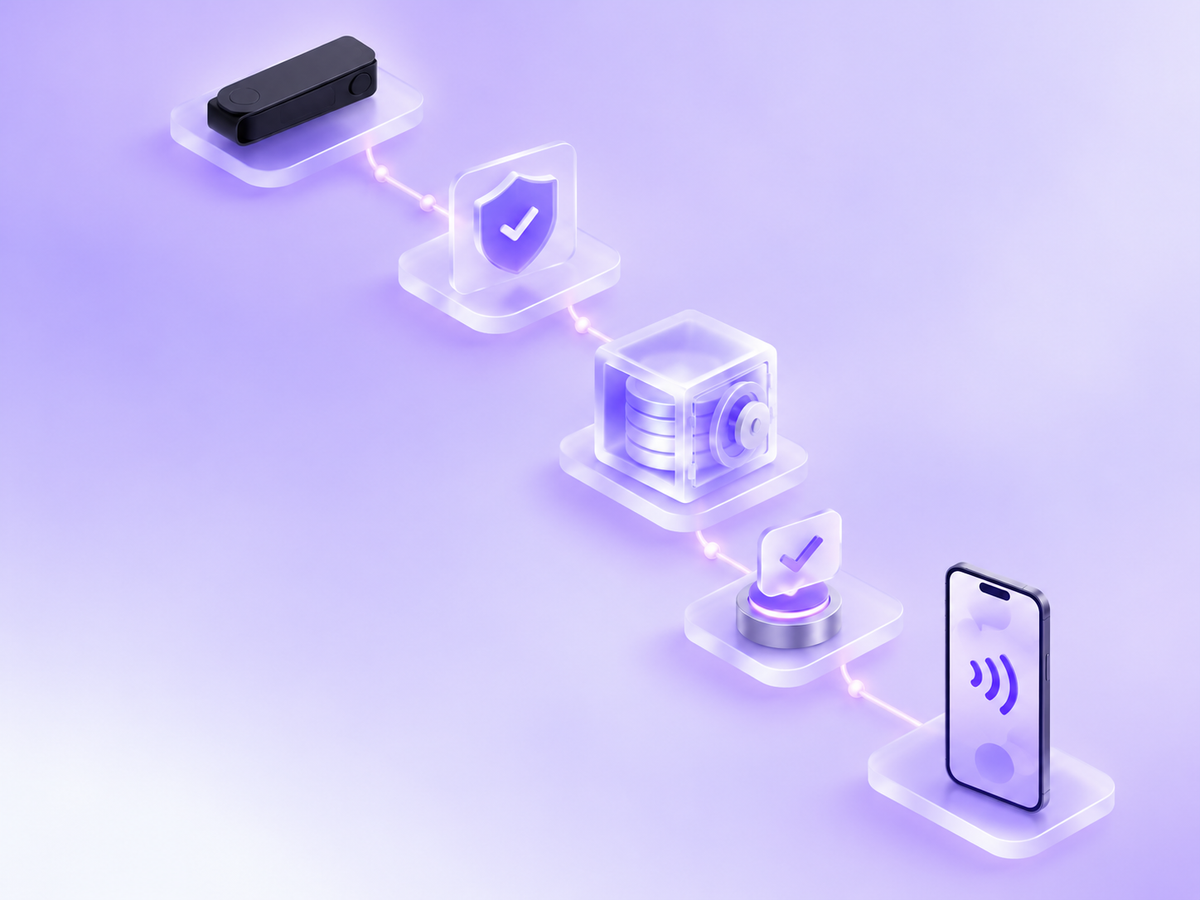
Connecting an air-gapped hardware device to a live payment card requires bridging the cold-storage signing environment to a compatible Layer-2 spending account. First, the hardware wallet owner binds the Ledger or Trezor device via USB or Bluetooth to MetaMask (for Linea and Mastercard access) or a Safe smart account interface (for Gnosis Pay Visa access). Second, the user navigates to the card issuance portal—powered by regulated Electronic Money Institutions like Monavate, Baanx, or Rain—and completes standard identity verification; while KYC links the legal identity to the card BIN, it never surrenders cryptographic custody of the wallet. Third, the user funds the designated Layer-2 address controlled by the hardware device with stablecoins such as USDC on Linea, EURe on Gnosis Chain, or weETH/USDC in an Ether.fi Cash vault. Fourth, using the physical buttons on the Ledger or Trezor, the owner signs the smart contract permission granting the card settlement module a strict daily spending limit. Fifth, the issued virtual Visa or Mastercard is provisioned directly into Apple Pay or Google Pay for immediate contactless retail execution.
Fee Comparison: Gas Costs vs. Centralized Withdrawal Fees
Evaluating the total cost of ownership between hardware-linked self-custody cards and centralized exchange cards demonstrates a substantial net savings for on-chain spenders:
| Cost Metric | Hardware + Self-Custody Card (Linea / Gnosis / Ether.fi) | Centralized Exchange Card (Standard Custodial Prepaid) |
|---|---|---|
| Custody Transfer Cost | $0.00 (Assets remain in user-controlled smart vault) | $1.50 – $15.00 CEX withdrawal/network sweeps |
| Point-of-Sale Gas Overhead | $0.001 – $0.02 (L2 gas on Linea or sponsored on Gnosis) | $0.00 (Off-chain internal database deduction) |
| Crypto-to-Fiat Conversion Spread | 0.0% – 0.5% (Direct stablecoin par or DEX routing) | 1.0% – 2.5% hidden liquidation spread |
| Foreign Exchange (FX) Markup | 0% on network rate (MetaMask/Gnosis) or 0% USD/EUR (Ether.fi) | 1.5% – 3.0% standard crypto card FX markup |
| Cashback Yield | 1% mUSD (MetaMask) to 3% USDC (Ether.fi Core) | 0% (un-staked free tier) to 2% (requires native token lockup) |

Frequently asked questions
- Can you spend crypto from a Ledger without KYC?
- Direct integration with Visa or Mastercard networks through Ledger Live, Baanx, or MetaMask requires standard KYC verification under EU MiCA and global AML frameworks; however, low-limit prepaid virtual cards such as SolCard offer unverified tiers up to $10,000 monthly with a 5% top-up fee.
- Is Trezor compatible with ERC-4337 smart contract cards?
- Trezor hardware wallets natively function as the root signer for Safe smart accounts (used by Gnosis Pay) and MetaMask hardware-linked accounts on Linea, enabling identical non-custodial spending protections.
Cards in this article


More from the blog

DeFi Collateral Spending: How to Borrow Against Your Yield Without Triggering Taxable Events
How DeFi collateral cards let you spend against Aave/Compound positions without selling. LTV ratios, liquidation rules and tax mechanics compared.

Top 10 Stablecoin Cards of 2026
The 10 best crypto cards for spending USDC and USDT in 2026, ranked on fees, cashback, custody and country availability.